Contact Information

Global 250-m terrestrial ecosystem carbon sequestration rate dataset from 2001 to 2022 (GTNEP_250m_2001-2022)
Dataset Overview
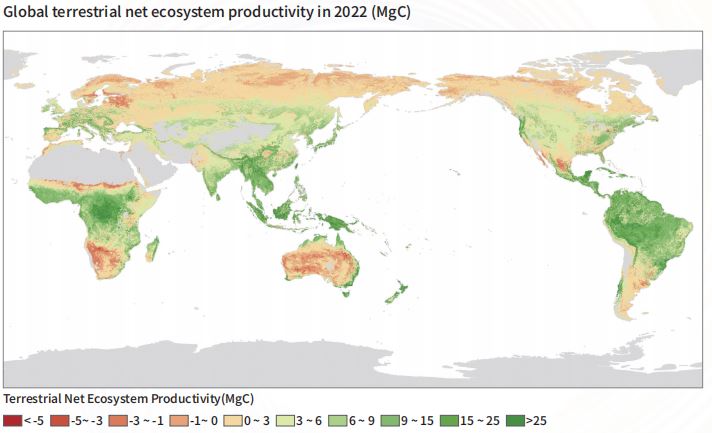
Addressing sample distribution imbalances through data augmentation, then using multi-source data and machine learning algorithms to generate long-term inter annual 250m global terrestrial ecosystem net productivity products.This product was developed using multiple data sources, including NEP observations from global flux networks (AmeriFlux, Fluxnet, ChinaFlux, and ICOS), MODIS NDVI and land cover data, meteorological variables (temperature, precipitation, and downward solar radiation) from the ERA5 reanalysis dataset produced by the European Centre for Medium-Range Weather Forecasts (ECMWF), soil organic carbon content at 0.3 m depth from OpenLandMap, and global atmospheric CO₂ concentration data. The methodology for product production involved several steps: First, flux tower-observed NEP data underwent quality control and temporal aggregation to generate annual NEP. Other multi-source datasets were preprocessed and extracted according to flux tower locations to establish an initial sample set. The spatial distribution and land cover representativeness of the samples were then analyzed, with data augmentation techniques employed to address sample imbalance. Finally, a random forest model was trained using the augmented dataset to produce a global 250-meter resolution NEP product covering the period from 2001 to 2022.

Dataset Details
Spatial Resolution:
Time Resolution:
Product Number: CBAS2025-2024Global13
Create Institution: International Research Center of Big Data for Sustainable Development Goals(CBAS);Big Earth Data Center,CAS
Created By: Liangyun Liu, Xinjie Liu,Qizhi Han,
Creation Date: 2026-06-06 17:55:53
File Size: 1
Data Format: Geotiff
Type Of Data: 栅格
Data Label:
